
Dad Testifies
In a desperate time, a strangely prophetic Congressional testimony.

On Monday, April 30, 1979, my father testified before Congress about an economic, social, political, and spiritual crisis in America. Both the circumstances and his words were extraordinary.

You can still find the testimony online, in a Congressional report called “Stagflation,” that strange coupling of productivity decline and inflation that gripped much of the seventies. The scope of the hearings was considerably greater than economics, though. Two years earlier Republicans and Democrats had come together for a 3 ½ year study to figure out why people and markets didn’t seem to respond to policies the way they had before.
“The underlying thesis,” said Richard Bolling, a Congressman from Missouri, “is that economic, social, political, international, and technical conditions have changed, and are still changing markedly. This suggests that conventional wisdom and established economic tools may not be equal to the challenge of making sound policies.”
“What we want to discuss today is where will the typical American family be in the next decade,” he continued. “How long before continuing inflation corrodes the basic institutions of our free society and market economy?”
From our current vantage this borders on optimistic fantasy: Our two parties joined in a bipartisan effort to figure out why the world wasn't working the way it used to, why people everywhere were freaking out, and what as a body of lawmakers they might do about it.1 The underlying state, however, is also strangely contemporary: People today also doubt the future will be better than the past, and they sense that forces out of their control have made the structures of their ordinary life not simply ineffective, but ridiculous to continue.
Dad sat alongside Arthur Okun, a Yale economist who’d served on the President’s Council of Economic Advisors;2 Otto Eckstein, a Harvard economist who’d developed the theory of core inflation, and who’d also built the first broadly-used computer timeshare service for economic data; and Martin Feldstein, also of Harvard and president of the National Bureau of Economic Research.3
My father had an indifferent Business degree from the University of Maryland,4 and had been a poet before discovering his true genius in sales. He rose to become publisher of LIFE magazine and then president of The Dreyfus Corporation, a large Wall Street mutual fund. He was to testify last, presumably as the voice of business.
Okun said the solution to stagflation was cost reduction and tax reform. Feldstein thought particular sectors needed tinkering and wanted higher productivity though tax policies, Eckstein said core inflation could be addressed by lower demand, and suggested raising corporate R&D.
Then it was Dad’s turn. “Your invitation to appear here this morning is, like all compliments, hugely gratifying and mildly mystifying,” he said before qualifying himself. “I have, however, spent a number of years reading and talking and thinking about the nature, the pace, and the effects of change, and simultaneously figuring out what motivates people to behave in certain ways in spending or hanging on to their money.”
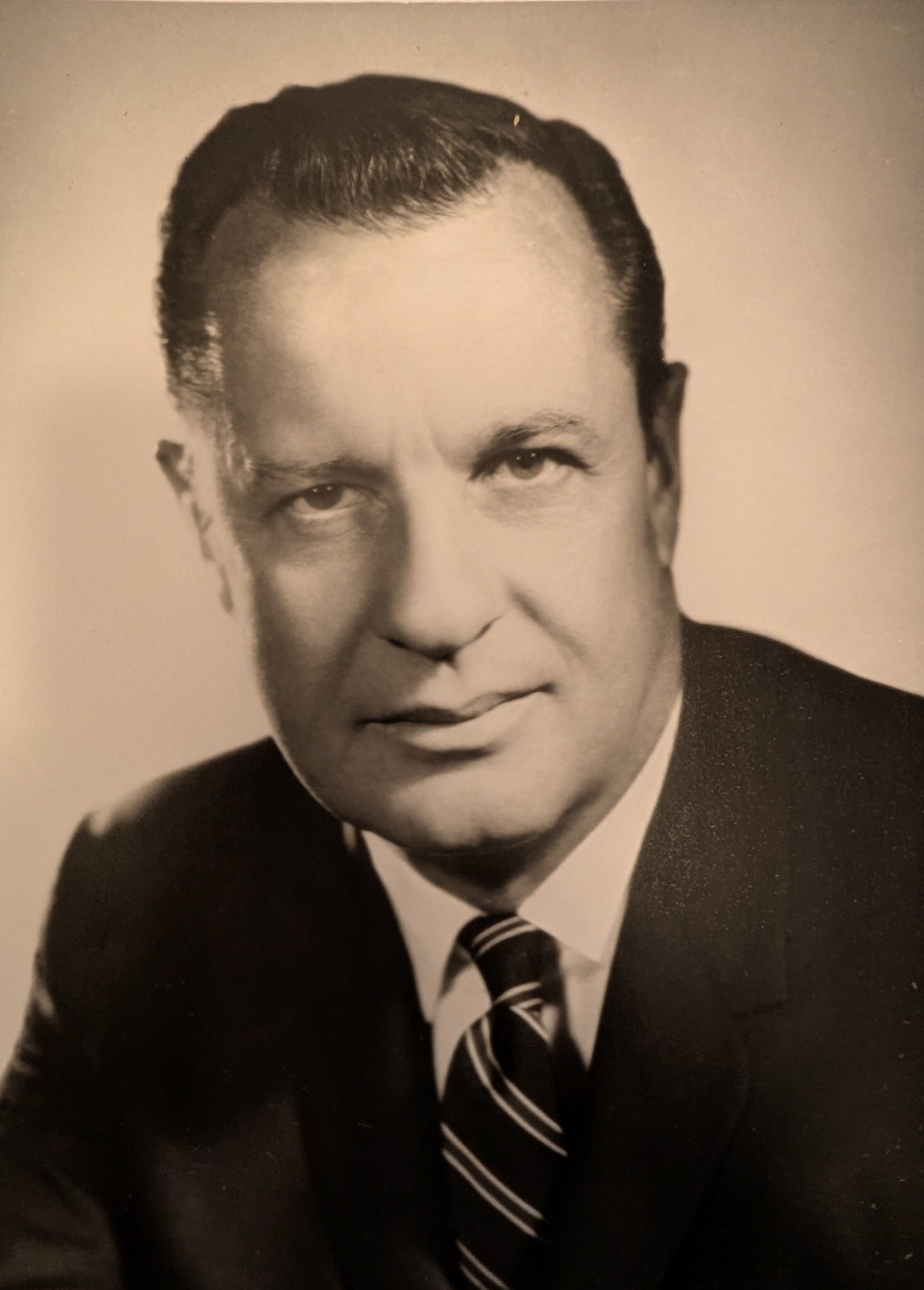
Then he went big. “Changes in the U.S. and world economies have been companion to changes now occurring in attitudes, goals, and even in deep beliefs within our society and others,” he said. We may be at the start of “a basic change from the rational, secular, scientific, and technological period which began eight to ten centuries ago.” This may lead to a fundamental change in the beliefs that permit common consent about the nature of the world, he said, hence the politics that manage it.
This, he suspected, was one reason for the alienation people felt from work and each other, and from “rigid institutions with their cynical stake in perpetual continuity.” He added, “we have focused on curing disease, not on holistic health, on economic productivity as if it were somehow indifferently related to the passions of the worker.”
“I believe that we are near a change,” he said, “that will no longer permit us to base our economic planning on the assumption that people work almost entirely to acquire things and that their appetite for material goods and services is insatiable…We should try to find out what is happening to the social organization that will change our perception of good work, useful work, interesting and rewarding work.”
In the face of what would soon happen in America, when the sunshine of Ronald Reagan combined with the brutal interest rates of Paul Volcker5 and the technology-led financialization of everything to create the apotheosis of the consumer society, this was an exceptionally poor prediction.
From today’s perspective, however, when social alienation and political cynicism seem intractable, when much of the country is addicted to painkillers and other noxious methods of escape from their lives, when it’s commonplace to think our technology will (a) take our jobs then (b) kill us, and when we’re so bereft of new ideas that we’re stuck in a terminal nostalgia loop, unable to conceive of a new world, I can’t help but wonder if he had an excellent point.
Later in the hearing, Dad was asked where the country’s leaders should focus their energy. “I would do those things which would reassure people that the whole thing is going to stick together. There is a growing conviction that something is very wrong out there, a growing conviction, I think I said earlier, that somebody is betraying the promises of a lifetime.”
That reassurance of unity in the face of radical change did not happen in any successful manner.6 In 2016 and 2020, however, a presidential candidate did notice a national conviction that the promises of a lifetime had been betrayed. Instead of telling them the whole thing would stick together, though, he built a nostalgia-first campaign of revenge and retribution, with little positive vision for the future.
It proved a very successful approach, at least in the short term.
The hearing was hardly unique: Polling data showed that Americans no longer felt in control of their future. In July, 1979, President Jimmy Carter gathered several dozen small-town politicians, business leaders, and ordinary citizens to Camp David, and came away shaken: People didn’t just talk about the energy crisis, or the ongoing hostage crisis in Iran, or the economy, but in Carter’s words, “a moral and spiritual crisis.” Ten days later Carter delivered what is now known as “The Malaise Speech,” an address about lost faith in the future that’s now more widely lampooned than read. It bombed, as Americans were told that Carter was blaming them for his mismanagement.
He lost to Ronald Reagan, a candidate promising not a recommitment of Americans to a common purpose in a new world, but a return to an earlier America. Then, incredibly, we had our ninth and final U.S. president to have served in World War II, followed by (so far) 34 years of Boomers. Moving on into a new thing is clearly an issue here.
Okun also merged the rates of inflation and unemployment to create the “discomfort index,” a term later modified to the catchier “misery index.”
Feldstein would go on to serve in the Reagan White House, where he was largely sidetracked because he didn’t believe governments should run large deficits in times of prosperity. This was actually how Republicans normally thought until a few decades ago.
My father was very smart, but he was a near-orphan with debts who went to the cheapest possible college. He then joined the ROTC because he needed clothing. Becoming wealthy and consequential was strange to him, though unlike many people like that I’ve known he mostly wore it lightly, and was more bemused than consumed by his occasional bout of imposter complex.
Named head of the Federal Reserve by Carter one month after the Malaise Speech. Volcker eventually raised Fed interest rates to 20%, their highest level in modern capital markets and as one wag put it at the time, “high enough to suck money off of Jupiter.” In the ensuing recession unemployment reached 10.3%, and the country weathered its worst downturn since the Depression.
You can see elements of this in the Malaise speech, but it didn’t work.
I don't think your Dad made a poor prediction, necessarily. Based on this testimony, he had a strong sense of what people wanted (and still want) and he described a real desire to transcend material acquisitiveness in favor of searching for deeper meaning in life and work. Globalization made things much more cut throat just as Reagan deregulated so many industries. It's amazing how much less philosophical our leaders in business and politics have become in such a short time. What angers me most about the current president slapping his name on the wall of the Kennedy Center is he could and would never speak so eloquently about art, philosophy and literature as Kennedy did. Though, these days, people don't much care.
Quentin, What a story and what a father. The apple doesn't fall far....
As I read this, I was transported back to those times and what made us feel so much uncertainty and despair. Watergate, the fall of South Vietnam, the Arab oil embargoes, inflation, the gas lines and energy saving measures, the Iranian revolution. So much seemed to be falling apart. I believe it maxed out after your father's remarks, later in 1979 with the Soviet invasion of Afghanistan, the Iranian hostage crisis, the dollar's collapse and the brush with hyperinflation. It all seemed so out of control.
And yet, it's worse now.