
Dangling Time
Making nostalgia new again, again.

U.S. Secretary of State Marco Rubio recently delivered a speech at the Munich Security Conference that laid out the U.S. vision for this century. Reactions ranged from “he wants to renew Western Civilization,” to “he wants to restore Western Imperialism.” Those two ways of looking at his big theme essentially came from these two points:
“We are bound to one another by the deepest bonds that nations could share, forged by centuries of shared history, Christian faith, culture, heritage, language, ancestry, and the sacrifices our forefathers made together for the common civilization to which we have fallen heir.”
“For five centuries, before the end of the Second World War, the West had been expanding – its missionaries, its pilgrims, its soldiers, its explorers pouring out from its shores to cross oceans, settle new continents, build vast empires extending out across the globe. But in 1945, for the first time since the age of Columbus, it was contracting…Against that backdrop, then, as now, many came to believe that the West’s age of dominance had come to an end and that our future was destined to be a faint and feeble echo of our past. But together, our predecessors recognized that decline was a choice, and it was a choice they refused to make. This is what we did together once before, and this is what President Trump and the United States want to do again now, together with you.”1
Rubio was inviting the audience to join the US in reversing what he sees as the current decline of western power, which began with the fall of the Soviet Union in 1989. Soon after, in his view, the West was grievously weakened by globalization, increased migration, and an international rules-based order that disadvantages the West.
What struck me deeply, though, was how much Rubio’s speech was wrapped up in the past, and how incapable he was of articulating a new vision for this century, now into its second quarter. When he did suggest solutions, they amounted to doing what we’re doing now, only doing it better.
This administration is hardly alone in its terminal nostalgia. For all the supposed world-changing technologies around us, we’re in a dangling time, waiting for an authentically new view of how the world works
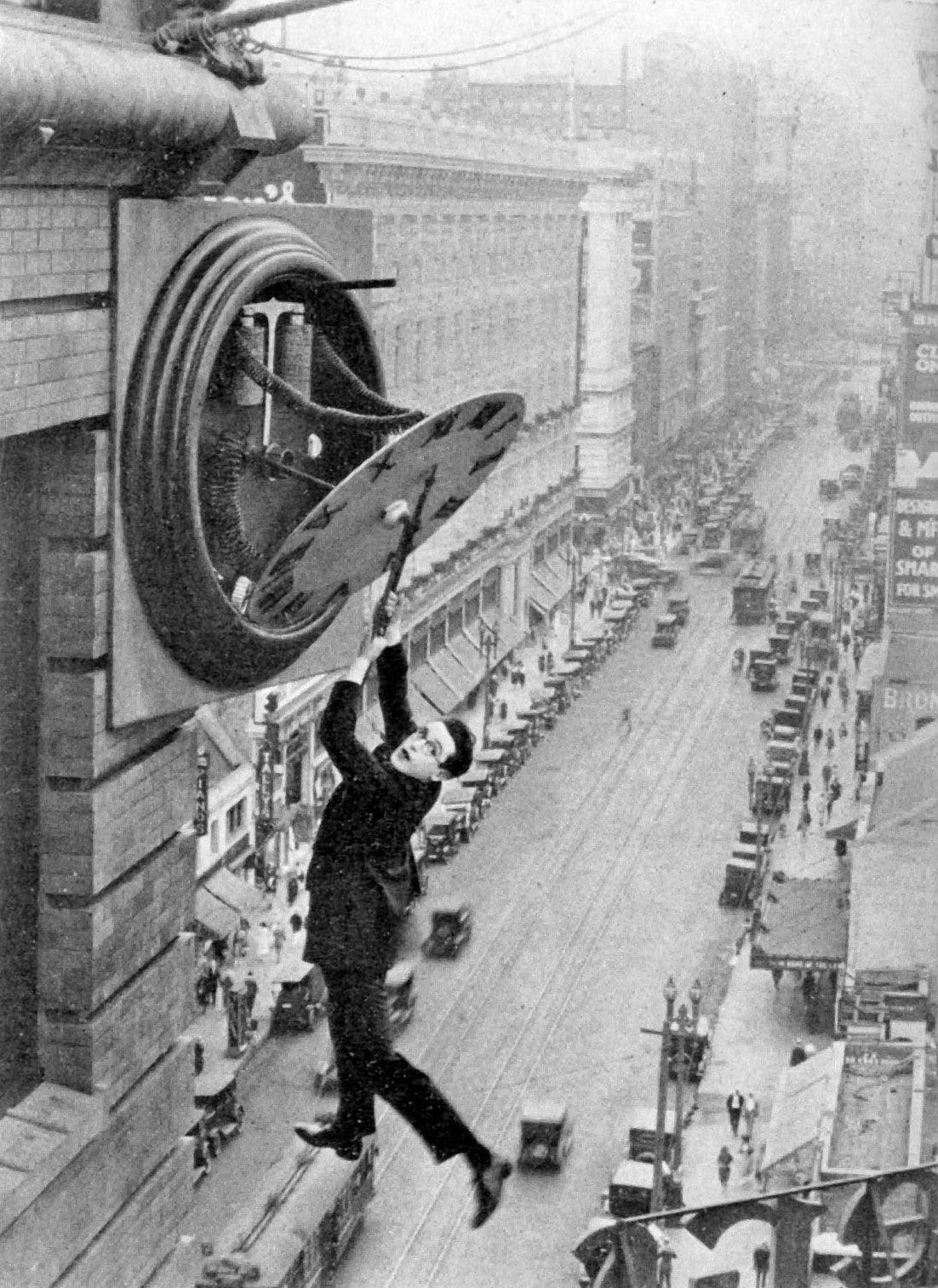
By comparison, consider the sensibility in 1926, which by then had been through the First World War, had seen the development of Modernism and the term “the lost generation,” and was coping with the discoveries of relativity and the new physics. No one was talking about how to continue the nineteenth century, the way Rubio talked of renewing the spirit of 1945.
Or consider 1826, which by that time had seen the cultural consequences of Napoleon and the Congress of Vienna, Industrialization, the Monroe Doctrine and the increasing European Imperialism. People understood they were in a very different place from the previous century; they weren’t thinking about new ways of continuing the world of Voltaire.
It could be that we’re closer to 1726, when people and nations were still internalizing the effects of the social upheaval, war, and natural disasters of the previous century, now known to historians as The General Crisis. While no one then was talking about renewal by restoring the 1648 spirit of the Peace of Westphalia, there was as yet no vision of the future. There was no intimation that the century would come to be known as The Age of Reason and The Enlightenment, or that it would face the turmoil of the Seven Years’ War and the consequent revolutions in the U.S. and France.
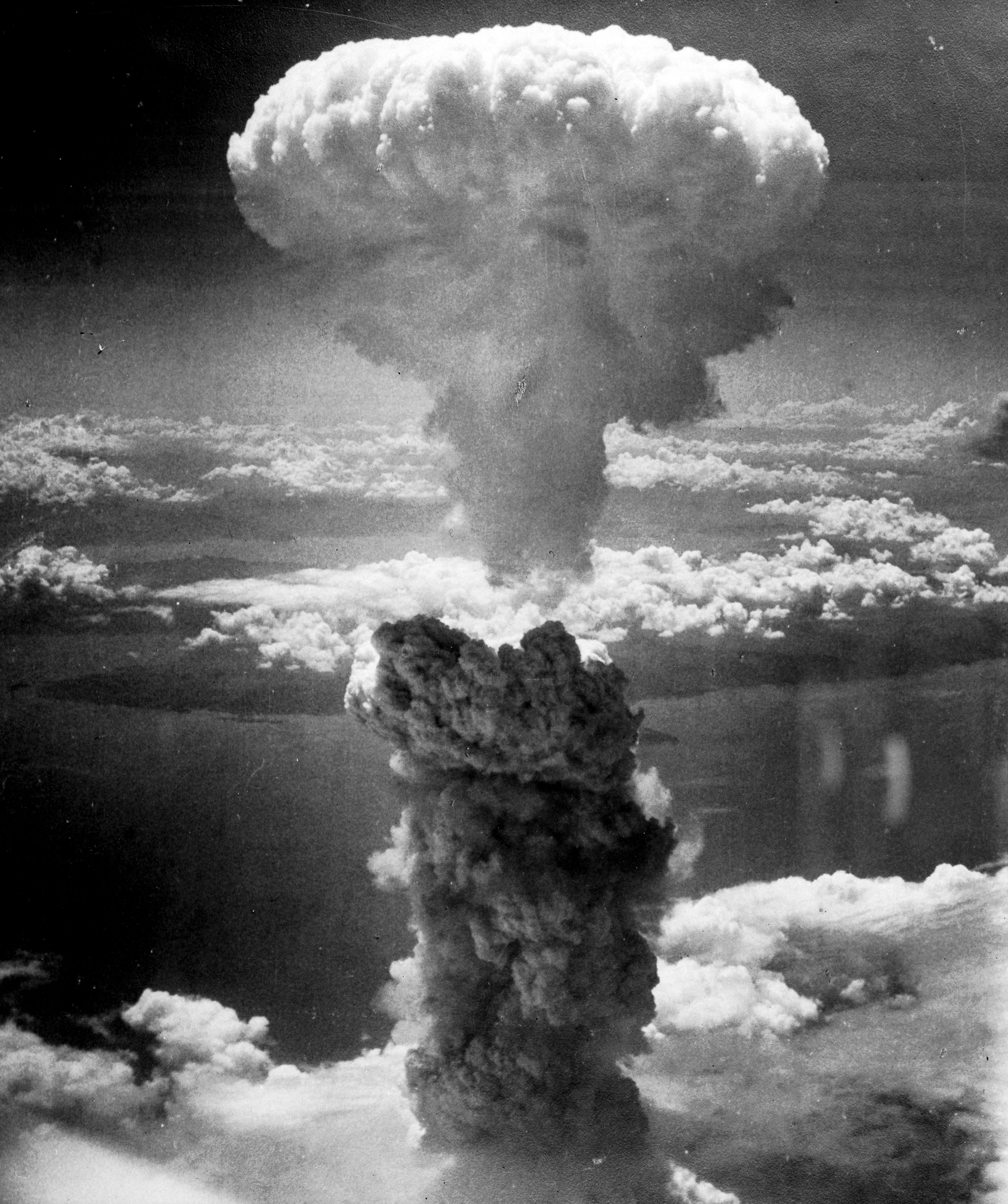
So it may be that the twentieth century, “our worst century so far”, as Elizabeth Bishop put it, was the kind of trauma that takes a lot of processing. The path we took towards the post-1945 recovery that Rubio talked about provided a respite from horrors so great that perhaps we’re all quietly afraid to stray too far from it. If we do, we fear, the terrors will resume. And, deep down, we wonder whether there is some new turmoil to come, one that will truly reset everything, turning nostalgia into a nostrum.
MAGA is, of course, a mixture of nostalgia and retribution for a supposedly stolen birthright, a rearward-looking movement. Its politics are frequently that familiar mix of sentimentality and state violence. But the MAGA faithful are hardly the only ones who can’t move out of the past. The speech of Canada’s leader at Davos amounted to, “America can’t be relied on, let’s figure out how to sustain the alliance without it.” China seems content to try and grow enough to deal with a grim demography, with no meaningful restatement of world ambition (they’ve had a claim on Nationalist Taiwan since the formation of modern China) while Russia does unspeakable violence in the name of recovering some of the empire and respect it had back in the Twentieth Century. Militant Islam wants to restore the Ummah, a supposedly lost universal brotherhood.
Traumas like the World Wars and Napoleon’s devastation remade the world. Our twenty-first-century troubles, in the forms of 9/11 and the Forever Wars, or the 2008 financial meltdown, have not been sufficient to propel a truly new view of the world. Perhaps we should be grateful. Even today’s oligarchs, who run much of the American show, don’t seem to have anything that new in mind (at least, not in public.) Our stasis remains strange, though, when you consider that we’re almost 20 years into smartphones, and eight since the head of Google said Artificial Intelligence is “more profound than fire or electricity.” You’d think that would come with new conceptions of the world, and changed social and political sensibilities.
At second glance, though, even the seemingly world-changing technology of our time, the Large Language Model of AI, is a tool that endlessly scrapes old information, in the form of stored data, reconfiguring it into something supposedly new. Once again, culture advances technology, every bit as much as technology advances culture.2
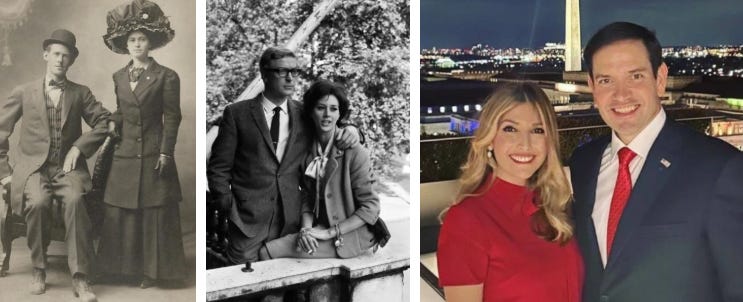
It’s been 15 years since Kurt Andersen wrote about stagnation in popular culture, and how you could wear fashions 20 years old without remark. And yet, in Saturday’s Financial Times I read about New York’s Fashion Week, and the continuing influence of Carolyn Bessette, “the former Calvin Klein publicist turned Camelot bride,” an impressive location of nostalgia for 1999 inside that time’s nostalgia for 1963.
At the core of Rubio’s speech was the idea that “decline is a choice.” So is a ceaseless nostalgia for a time now vanishing in the rear view.
Yes, the Secretary could use new fact checkers. For starts: During the earliest part of those 500 years of supposedly uninterrupted expansion there was more than a century of conflict between Catholic and Protestant states that drew down the population in some parts of Europe by a third. So much for Christianity as a monolithic force in uninterrupted expansion.
To that end, it’s interesting that the most “Age of Reason” thing going on in 1726 is the extraordinary output of J.S. Bach, whose complexity represents mathematical precision in the service of emotional experience. Another example of the artist intuiting where the times are going. As Martha Graham said, “The artist is not avant garde, everyone else is behind the times.”