

This is a business story about technology, branding, military contracting, migration, porn, drinking, and industrial espionage. Needless to say, it all happened about 2000 years ago.
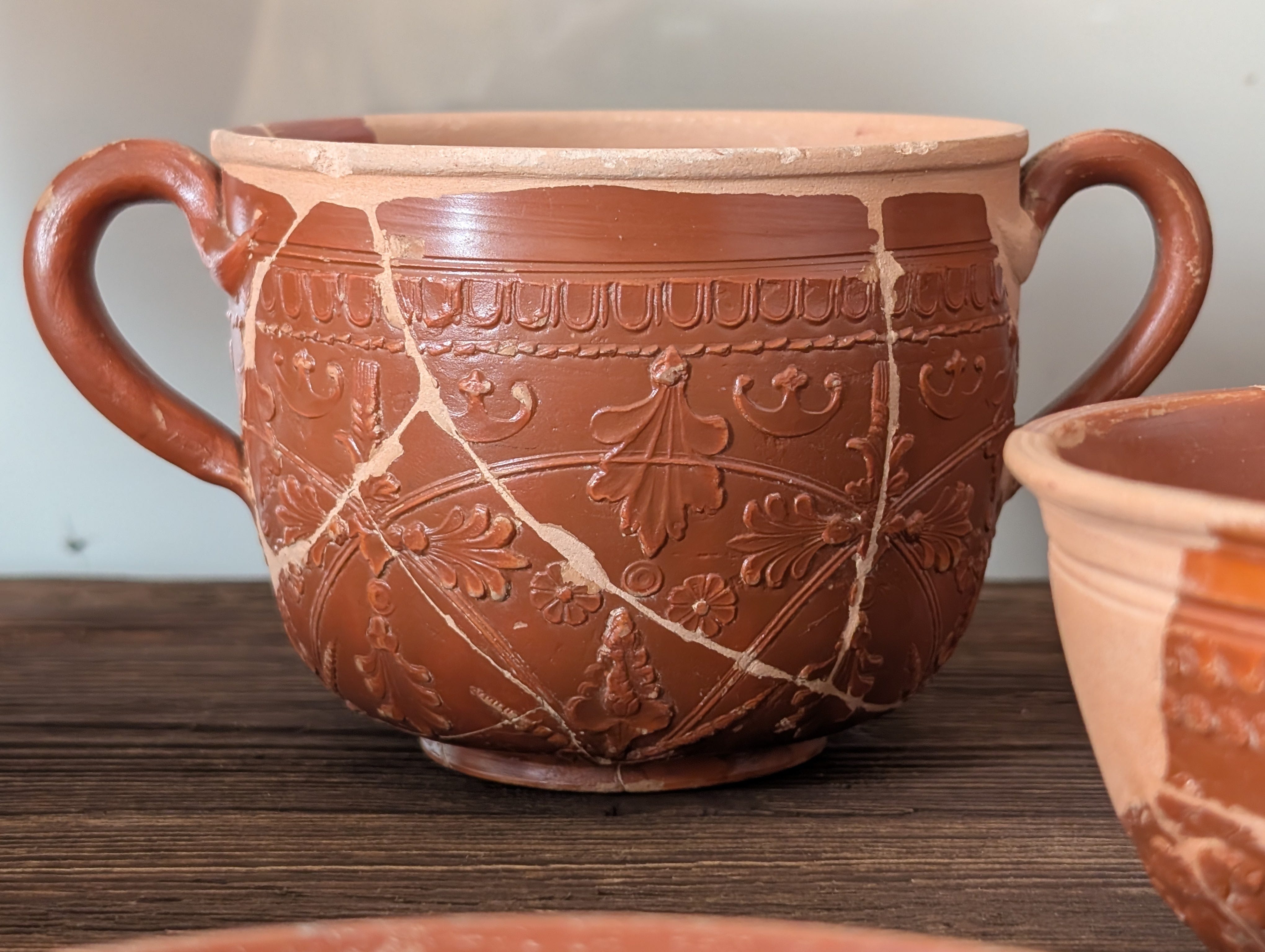
Around 50 BC, artisans in the Roman Empire’s city of Arezzo hit upon a seemingly innocent technological innovation, a cheap way to put a red glaze on their commercial pottery. This became a very big deal, particularly when, a couple of decades later, they combined the glaze with molds that had all sorts of different images on them, from monkeys to gods.
Never knock simple innovations that make familiar things seem new. Remember when Steve Jobs took over Apple Computer with nothing stirring in the pipeline, so they combined the monitor and processors into a single unit, and sold them in colors other than black or beige?

These were basically cosmetic changes, plus an Internet-ready connection, but the new model became Apple’s bestselling computer to date, saving the cash-poor company. Same thing with this Arezzo pottery: Suddenly the lower and middle classes had something they could use that wasn’t black.
A few decades later Arezzo ware was so ubiquitous that writers referred to ceramics in general as arretina vasa, or Arezzo vessels. Kleenex, Band-Aids, and Google are in a strong tradition of individual products becoming standard ways of thinking about things.
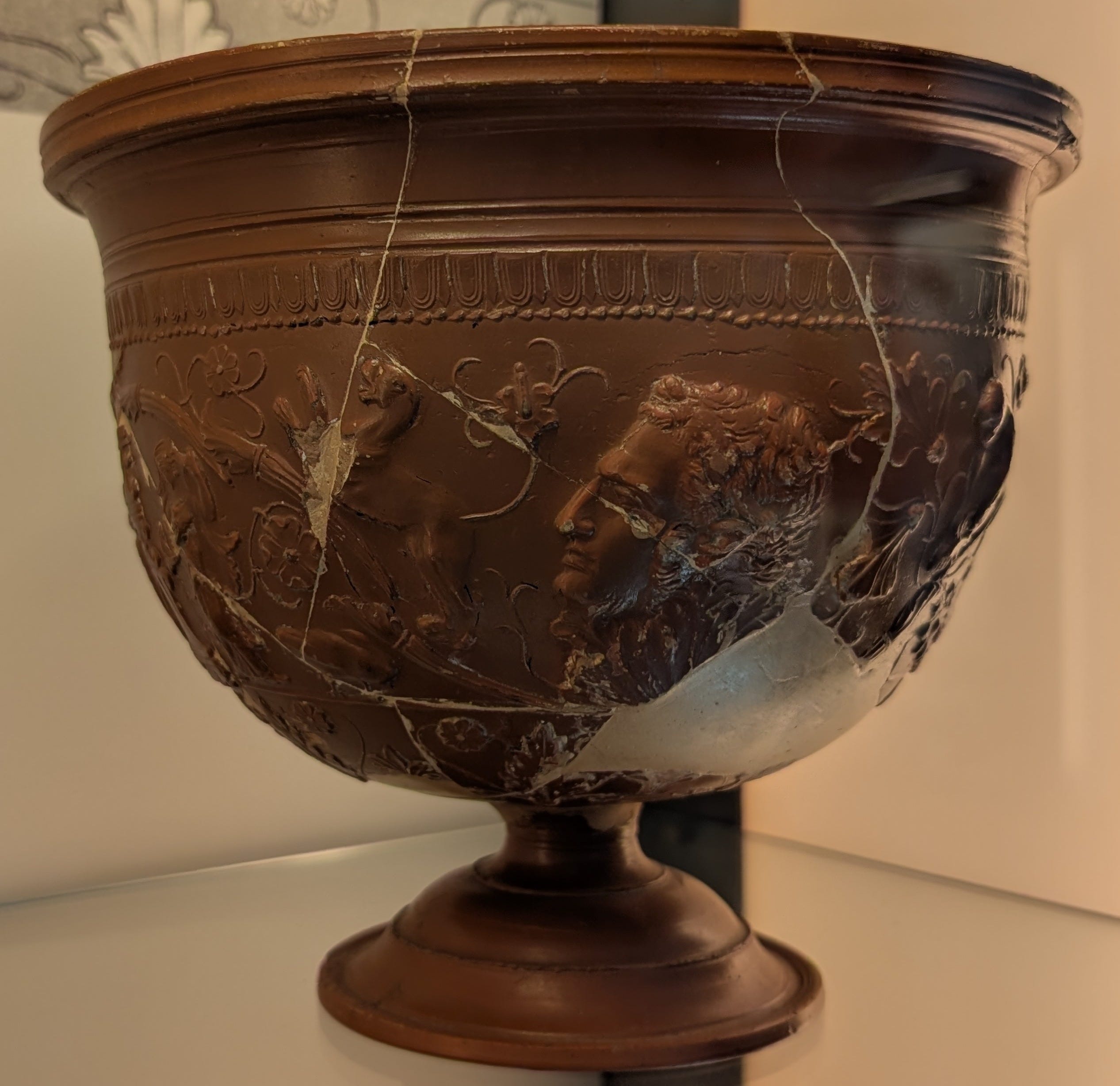
This pottery wasn’t just an affordable product with pretenses to luxury and learning (when you show a picture of Bacchus on your wine cup, you’re showing you love the classics.) It helps to be linked to a culture that’s on a roll. Arezzo ware came along just as the Roman Empire was in its greatest phase of expansion. A producer name Cneus Ateius, working through family connections, managed to get contracts to put his pottery in the standard kit of the empire’s soldiers.
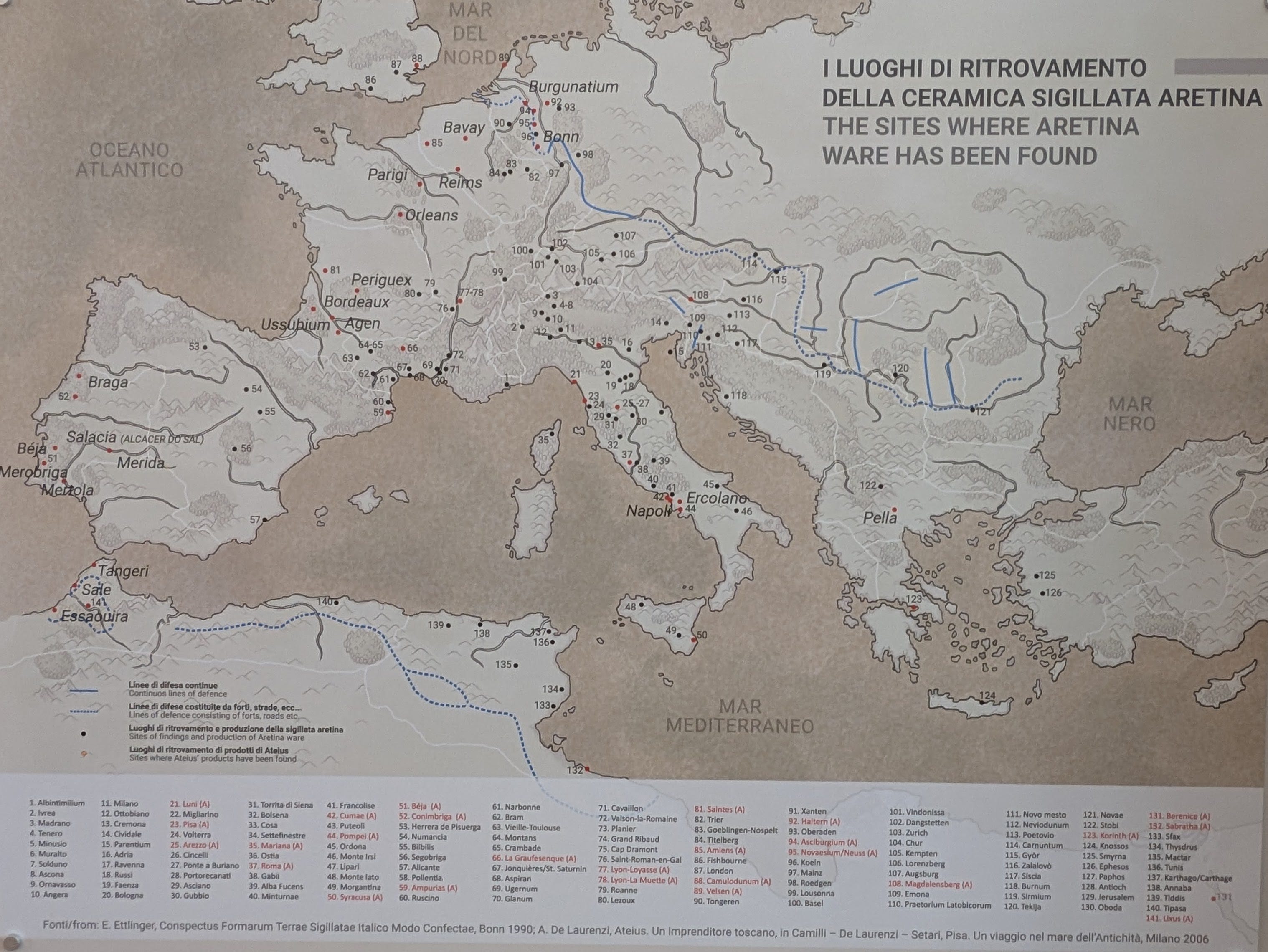
For little money, a conquered people could show affinity with the newly dominant power. It’s not a stretch to see a parallel with the way Hollywood movies captured world culture after America emerged as the sole superpower after World War II. Remnants of Arezzo ceramics have been found not simply throughout the Roman empire, but as far away as India.
Cneus Ateius was excellent at adding new molds and images, such as death, lesser gods, barbarians defeated in battle, and couples making love. So many plates, cups, urns, mixing bowls, and always something new.
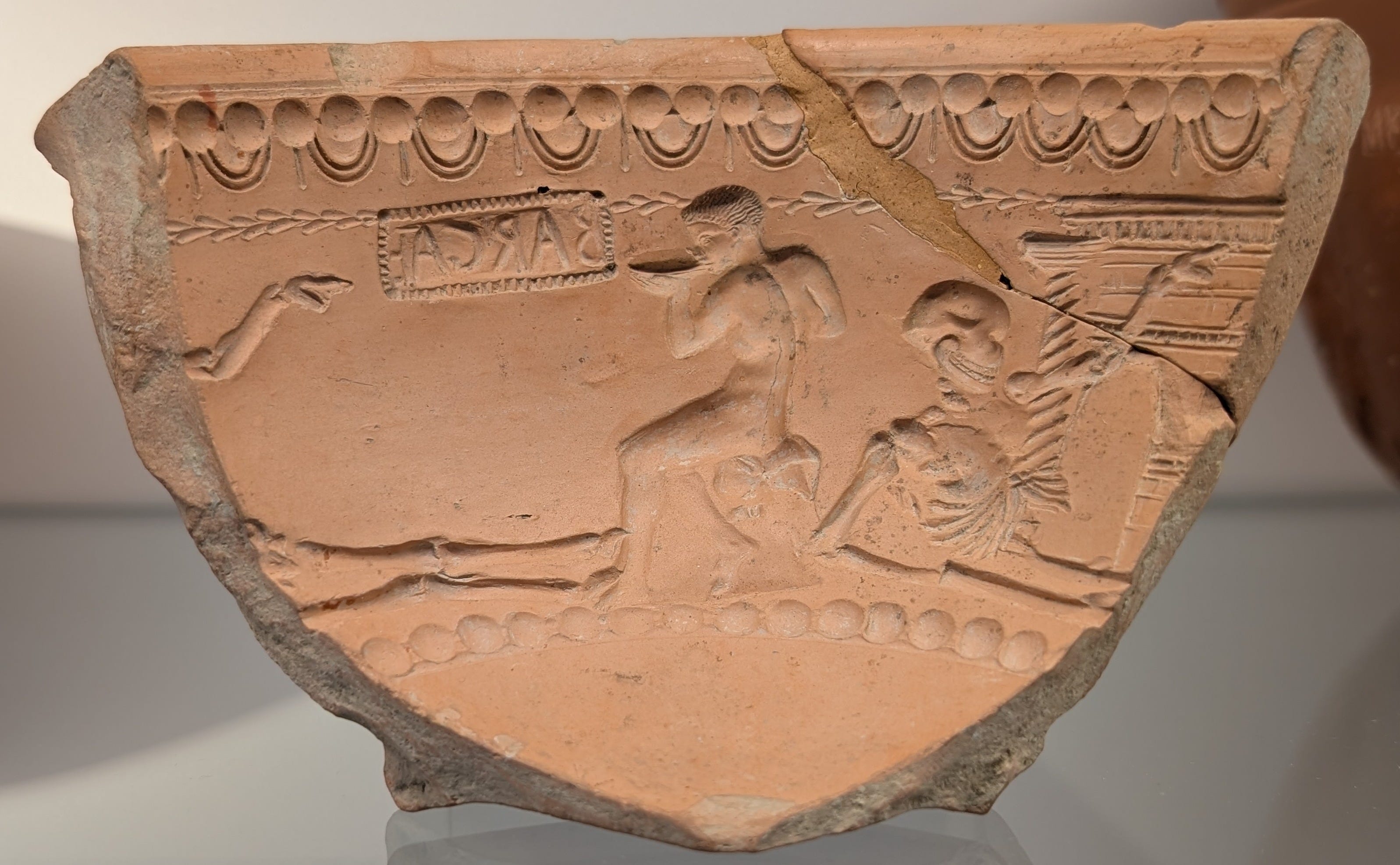
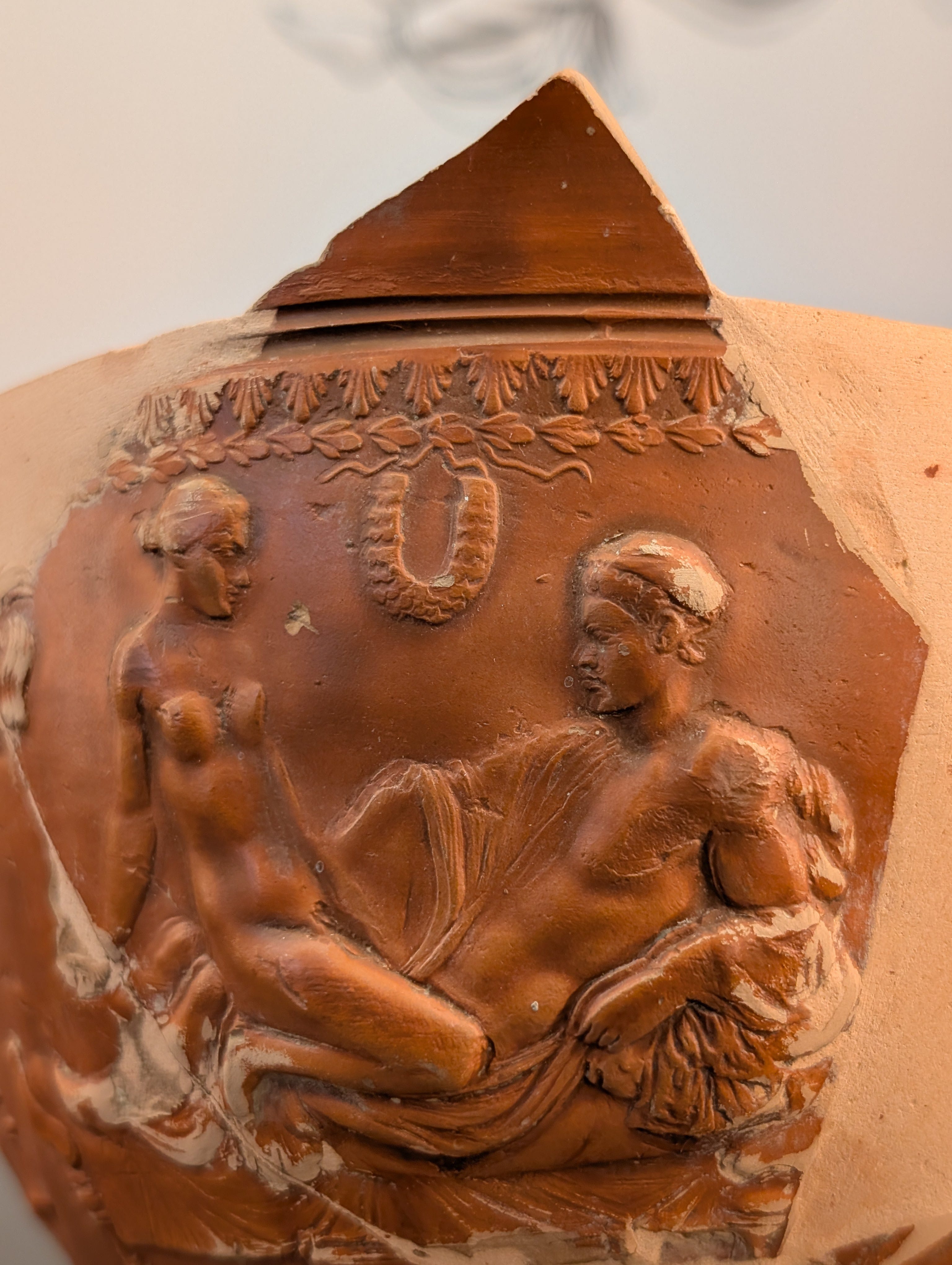
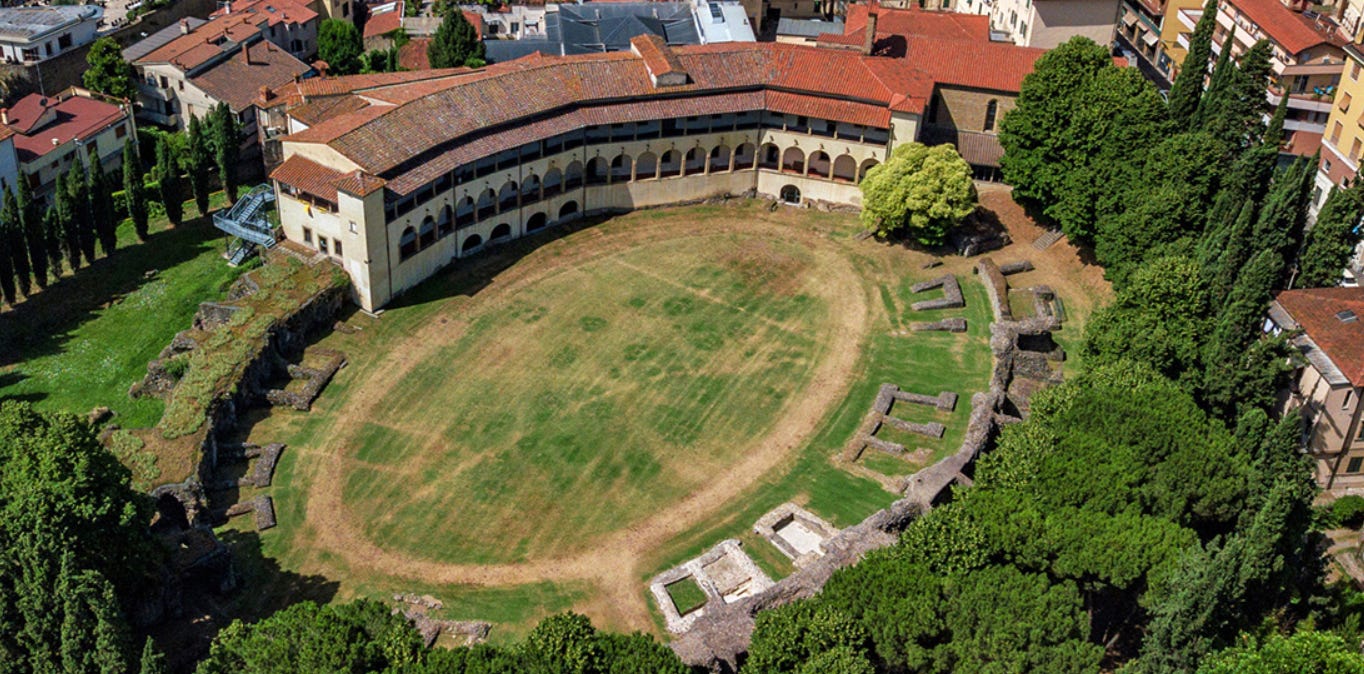
This expansion came late in the Arezzo pottery boom, and may have contributed to its eventual downfall through over exposure. By then pottery had already turned into such a big business that it had changed the demography of the onetime Etruscan stronghold. So many foreigners migrated there that the Etruscans were displaced, and new Roman-type houses and entertainments changed the look of the town forever.
Cneus Ateius also expanded production to the city of Pisa, north along today’s Italian coast, and into southern Gaul. There was more production, more images, and more spread of the know-how for making this kind of pottery.
Sure enough, Arezzo’s sweet century-plus of pottery riches came to a rapid halt, when cheap knockoffs appeared, first in Gaul and then arriving from North Africa (today’s Tunisia and Libya.) African red slip ware soon dominated as a new standard. Between about AD 100 and the mid-Seventh Century it was what most people ate off and drank from.
It weathered its own copied versions from Egypt and the Eastern Empire, with no sign of slowing even during the Vandal capture of North Africa in AD 439, and the eventual collapse of the Western Roman Empire. The sun sets on all greatness, but people still need something to get wine down their necks (maybe more than ever at times like that.)
Things finally collapsed around the time of the Islamic conquest in 622. During this period trade and wealth were disrupted throughout the Mediterranean World. In addition, the strictures of Islam knocked out the widely-held standards of what kind of things could be depicted on a cup, even for export. Big cultural changes have their own consequences.
It is said that a conquering Roman general was supposed to return in triumph on a chariot, his family before him and at his side a seer whispering in his ear, reminding him that all of this is vanity and that he too would die. Which, while admittedly a bring down, is a lesson that all of us might take to heart.
Or, in this commercial variation, we might recall that the great motives of business - status and desire, helping people feel cool and powerful for less money, branding - have been with us for thousands of years. The status objects change. Some are trivial, and some are world changing. So far, though, each has had its cycle of amazement, grandeur, and oblivion. Long may it continue.
Small comfort maybe, that we are simply predictable for millenia..