
Road Stories
We know our lives aren't linear, but how else do we make sense of them?

There’s a handy reporter’s technique I learned from the great James Stewart. When you want someone to explain themselves, ask them for their life story backwards. Begin from where you are today, is the ask, and then talk about what brought you here, and then how you got to that earlier place, and so on back.
This reverse chronology gives the reporter a clear line in their notebook. A pathway to understand this person, in their own words, that describes them without detours, and that seems to lead inevitably to where they are today. When most people tell their stories from the beginning, they change up their values and insert more ambiguity, unnecessary details, and dead ends. They describe their real life, in other words, which the writer has to then squelch and prune to derive what journalism needs: a clear story, without a lot of ambiguity and extraneous detail.
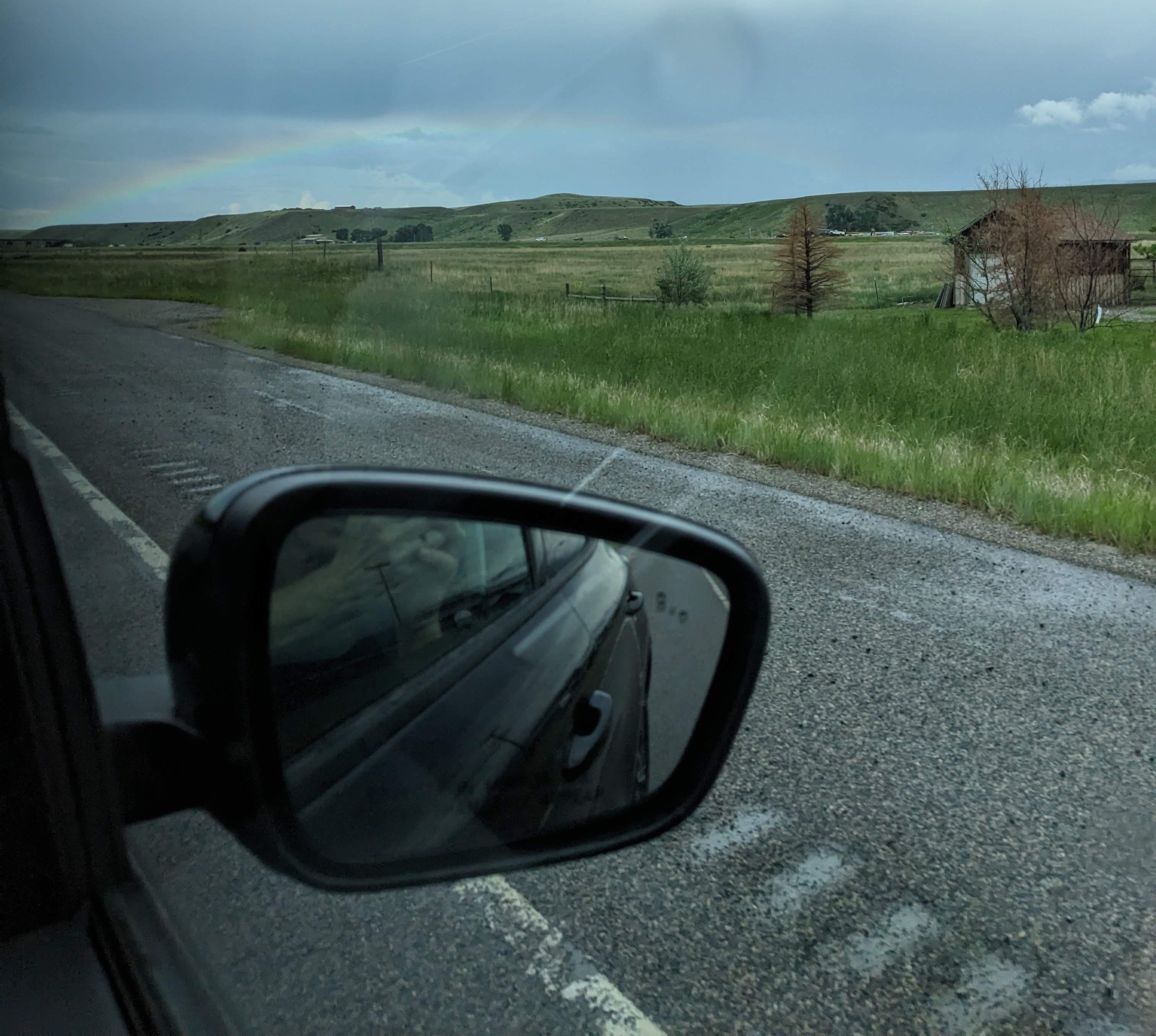
This is not a dishonest trick. Most of life is ambiguity and details that don’t fit our story. Interviewees understand the reporter’s technique straightaway. It’s like looking in the rear view mirror to see where we’ve come from, without thinking about all the turns and hazards we missed along the way. In memory our life is a road, and even if it started somewhere arbitrary and somehow took us here, we keep our story largely free from the myriad of considerations, influences, and random effects. Telling it backwards facilitates that.
I bring this up because Autumn began last week, and Autumn is our stock-taking season. At this time of year, previous generations would harvest crops, prune, ferment winter beverages and smoke meats for the times ahead. It was an essential time in the cycle of life. Nowadays, young people throw things in their cars and drive off to college, where they tell other freshmen a linear story of their still-forming lives. Older people throw fewer things into larger cars and drive back for reunions and homecomings, where they will talk about the roads they have been traveling for decades. My acupuncturist1 tells me that, in Chinese medicine, Autumn is the season of casting off things, pruning and simplifying our lives, and thus our life stories.
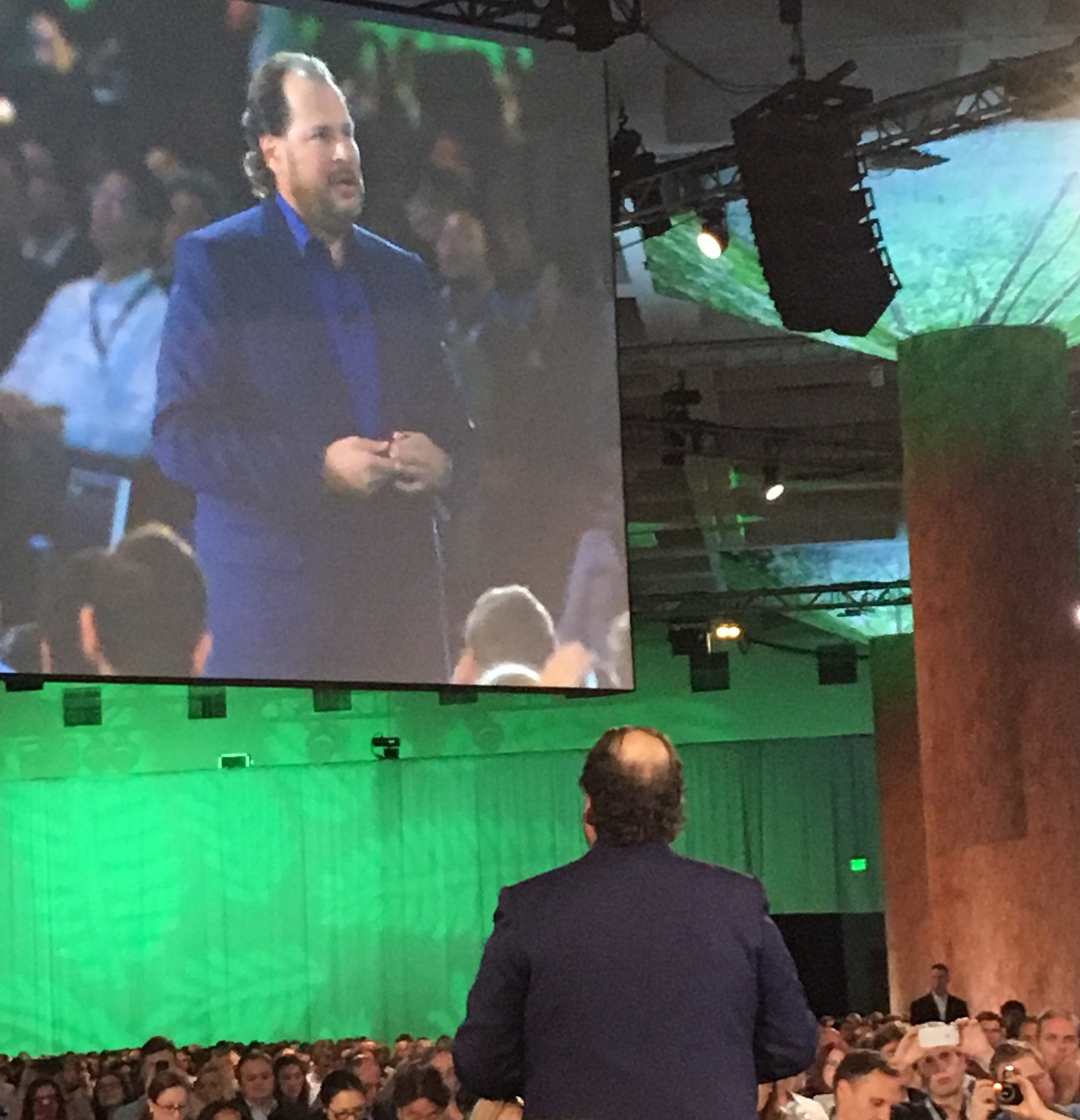
When I was in the speech-making/panel-moderating/conference-going business, 80% of my year’s work occurred between September and December. It’s the season when people figure out where they stand, and search for new ideas. I don’t think I’ve given a successful speech that wasn’t basically one big idea, delivered in a linear way. In panels the point is to expose various points of view, and then unify them at the end in a single takeaway. Even with the disagreements, and a good panel has those, the audience memory should be linear.
It’s all a necessary fiction. There are always too many things contending in life. Anyone who’s managed some or all of the obligations of a relationship, kids, a career, a creative inner life, and even patriotic duties knows all too well that it’s not a road, but a web, or an ocean. It’s the same with a company of any size.
But it’s hard to remember even half of the other possibilities that were open to us at any time. When we do remember most of the steps we didn’t take (the job we passed on, the college we didn’t drop out of), we fictionalize them as things that would have gone well, leading us to a better road than the mostly good one we have now. Now there’s a fiction.
No one but a genius can describe all the interactions, even inside their own heads. Certainly not in a speech, or over a Michelob Ultra, while you’re trying to reconcile the 50-years-older face with the yearbook photo on a classmate’s name tag.
Which is why we make simplified roads for all sorts of things. The histories of Art and Science are thought of in mostly linear ways. Giotto gives rise to Donatello, who takes us to Da Vinci, and so on. James Watt perfects the steam engine, which enables the locomotive, bringing forth the Industrial Revolution. Darwin saw evolution as an innumerable number of interactions that endlessly optimized an environment, but his ideas were immediately taken up as the story of a single species, humans, forever becoming better on an ever more sunny road.
Many Americans believe the story of America is embodied in road stories, and not simply those of Twain or Kerouac. Famously, Martin Luther King’s long arc of the moral universe continues to bend towards justice. Nowadays, Pete Hegseth speaks of America as a historical warrior culture,2 growing in power and consistently in the right, as long as it is not limited by DEI or bureaucracy.
Roads feel like certainty. Technology used to affirm this mindset. For centuries, clocks kept spinning around the dial in a regular, decisive way, and people tracked where the hour hand had been and where it was headed. The Industrial Era doubled down on that, with machines that had linear functions: Piston A turns crank B.
That aspect is changing now, as we capture more data and seek to create systems-oriented views of the world. It’s messier out there. At a nano level, biology, chemistry, and physics interact in a single process. With more documentation and more voices, individual choices and acts steer history in incremental ways. I’m currently reading an excellent book on the birth of the steam engine that touches on everything from previous theories of gas behavior, to the need for coal to heat homes in London, to the revolutionary idea that ideas were property, to popular magazines for craftsmen that taught math. It’s pretty much pure web, no road.

This account may well be closer to reality. At the most fundamental level, the real time, real experience of life is (paradoxically) an infinite and undivided series of “nows,” with memories of an irredeemable past and and guesses about a future that does not exist. No road, web, or ocean, simply the eternal present.
Much current research promotes this less-secure view of ourselves. Unnervingly, neuroscience finds that we make choices before we consciously think we’re choosing. Which is to say, we’re not even in the “now.” We aren’t even ourselves; we now know that each of us is 25% more bacterial cells than human cells. But to live inside that truth, an elusive self always reacting to a nonexistent past with no path ahead, is intolerable. We can’t dislodge the idea of an imperial self, on a linear journey through time.
Certainly, the current methods of Artificial Intelligence won’t move us off the road model. It’s trained on huge amounts of information, much of it taken from the World Wide Web. Drawing from this jumble, statistical software is deployed to create best guesses for a linear answer, which it is programmed to communicate with certainty. It draws from a web, but it gives readers a road.
The future may be an illusion, but the endurance of harvested and pruned facts, homecoming stories, recollections, roads behind and roads ahead, is certain.
Hilary Musaji. If you’re ever in Walnut Creek and need your Qi straightened out, she’s the one.
Our Secretary of War recently declared that the soldiers who massacred Indians 135 years ago at Wounded Knee would keep their medals, adding, “This decision is now final, and their place in our nation’s history is no longer up for debate.” History, of course, is eternally up for debate. One generation’s road is the next generation’s demolition derby.