
Con Me Twice.
How I paid a criminal tuition to learn the cost of feeling certain.

A con man hangs out at my local gas station. He claims to be from Fresno, California, about 180 miles from here, and he’s very low on gas. Could I put a few gallons in his tank? This was a particularly good angle when everyone was feeling pain at the pump. When the woeful man from Fresno showed up a second time, though, the game was thin.
Instead, he put me in mind of a couple of better-developed cons I’ve encountered that worked more effectively. In different ways both of them messed with my consciousness. I doubted what to trust, and felt foolish for being conned. At the same time I really wanted the stories to be true.
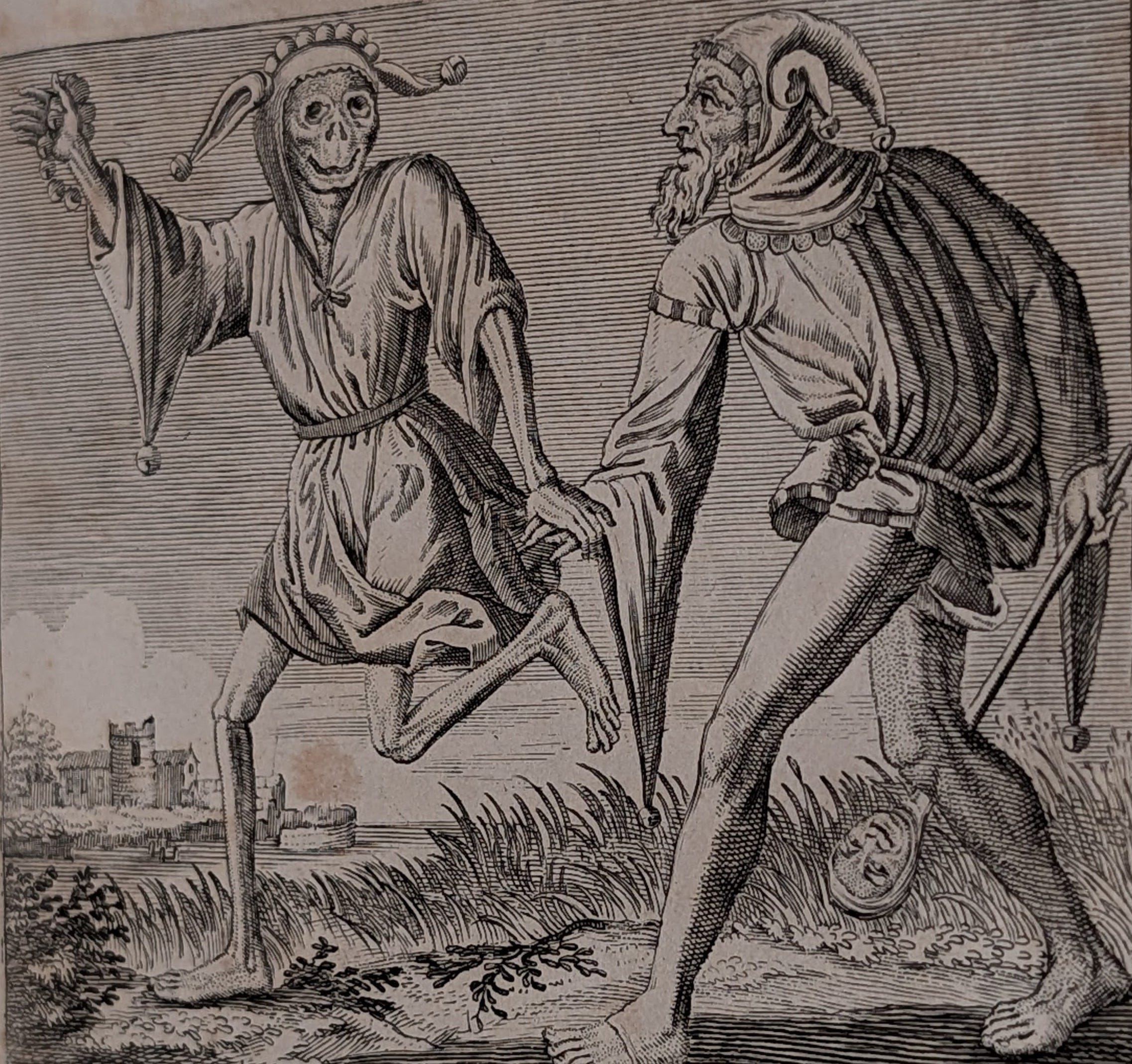
The first con happened in Singapore, where just out of college I was a traveling salesman.1 I had an office in a factory warehouse, back in the jungle. One day a fakir of sorts walked through the door, a large guy with a turban who was ostensibly looking for someone else. He suddenly focused hard on me, and told me he was telepathically receiving a very important message about me. He moved fast, and was relentless and emotionally persuasive, telling me this message was about my dad. He had me write down my father’s name, ostensibly while he looked the other way. After I’d thrown away the scrap of paper he wrote down a similar-enough name, and acted as though it was magic. Not quite good enough. I was plenty confused, but also upset by his goof, and suspicious. After his threats against my spiritual well-being and my insistence that we call the cops, he left.
The local guys I worked with turned grim when I told them this story. Their culture was both educated and superstitious, so people like that were considered both grifters and black magicians. I was drowsy and disoriented for several hours afterward, as though the fakir had been hypnotizing me when he goofed up his spell.
Eleven years ago I was conned again, this time in Schenectady, New York. I was in town for a Times story about industrial sensors and data, visiting a couple of the few remaining General Electric plants that still there.
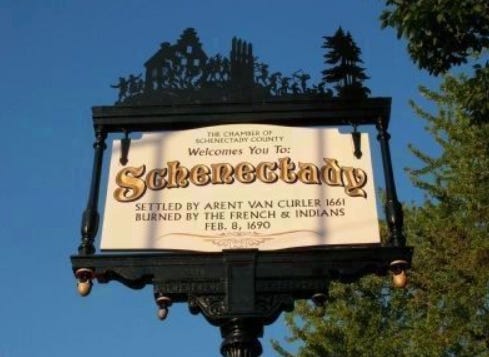
I got there a day early and walked around, hoping to pick up some local color. Schenectady’s history goes back to the 17th Century. There are still many interesting old houses in the town’s Stockade District, a name referencing the towns 2 origins as an English fort on the frontier, there to support a burgeoning fur trade. The Erie Canal runs near that part of Schenectady, a mark of its early nineteenth century industrial prosperity. A plaque on one house in the district said that in 1860 it was home to The Ladies Society of the Home of the Friendless, a name redolent of wealth and largess.
Thomas Edison located the Edison Machine Works in Schenectady in 1886, and soon the town became the headquarters of his General Electric Co. Like Rochester with Kodak, Schenectady became a company town, its identity wrapped up with one employer. Not far from the Stockade District I met a man whose French Protestant family had been in Schenectady for 300 years. He told me that during World War II more than 45,000 people worked at the GE factories there, and when soon after the war he was a kid in school his classmates were from Sweden, Germany, Japan. It was a magnet for the world!
No more. In the nineteen-eighties the mayor decided to tax GE’s buildings, and the new CEO, Jack Welch, did not play ball. He demolished as many buildings as he could, and relocated GE’s corporate headquarters to Fairfield, CT (which had a lot more 80’s chic than a small town in upstate New York.)3
Thus began Schenectady’s long slow decline; the most significant employer became the state, opening a number of hospitals, shelters, and drug treatment centers.
Which was why, according to the man at the front desk of my hotel, the town had lost its industrial base and gained an economy of the short con. “Notice: Do not give money to strangers,” read a sign at the desk. These strangers were addicts hanging around town after they’d been bounced from treatment, the clerk said. They were friends and family of the addicts and the homeless. They were people passing through because the town had become such a cheap place to live.
Thus I was well warned about the new Schenectady before I returned from my tour of the old parts and came through downtown. But I was filled with the romance of its history, the hopes and achievements of fur, canals, and industrial boom, this place of largess, the envy of the world, as told to me by a Huguenot descendant who’d stayed on, and the plaques. Jack Welch’s rubble, yes, with perhaps a bit of hope in the nice bike path along the canal.
A woman was crying in the twilight under an abandoned theater marquee. Her hair was a mess, and tears had made her mascara into a black smear on her cheeks. She held a phone to her ear, and as I passed she looked at me like she was lost. It was a look begging for connection and response. “It’s going to get better,” I said in my most reassuring tone, walking on.
“Mister,” she said, “are you from around here?” No, I said, stopping.
“I just got here today, and it’s getting dark,” she said. “I’ve never been in a big city.” That was a good one, as Schenectady is not a big city. She looked like she was about to bust into tears again, and in a haphazard way she laid out her tale: Her car had broken down, it was the transmission, she’d gone to the cops, who’d recommended a social services agency. She lived 90 minutes drive away, and she had kids! Her sister, who worked at the hospital, couldn’t take them because she’d just picked up a second shift.
I asked her how much she needed to get home. Forty-four dollars. The amount barely registered with me, I was so caught in her emotional pull. Like the fakir, she’d created in me a near-hypnotic state. Her desperation and need had given me an overpowering sense of generosity and largess, the good feeling that comes from doing something.
There were plenty of holes in her story: It’s unlikely that an adult with a car had never been to even a small city, unlikely that a car could be fixed or that a cab would drive three hours for so little money. She never mentioned where her kids were or whether she’d been in touch with them. But none of this mattered, in all her confusion and pain. I wasn’t adding things up. I was caught up in the tale of chaos and danger. Assuring her and helping her by reaching for my wallet felt like control. In fact, I was in thrall. But giving her three twenties was thrilling, like buying extra safety.
Sustaining the con, she got out a diary to take down my name and address, so she could return the money. As she rummaged in her purse I noticed a man’s name tattooed on her neck. Not a small town thing, but it didn’t register. I opened the book to a page with several other names and addresses. She grabbed the diary back. “That’s where I write down my private thoughts,” she said. She opened it to a blank page, but her story was breaking up, same as the fakir’s. I began to sense I was being conned, but in my cognitive confusion I just wanted out more than I wanted my money back. It felt better to stay inside that idea of myself as a good and generous person, an idea we all want to hold on to, than it was to challenge her performance of pain. I wrote down a fake address and soon she was walking toward the bus station.
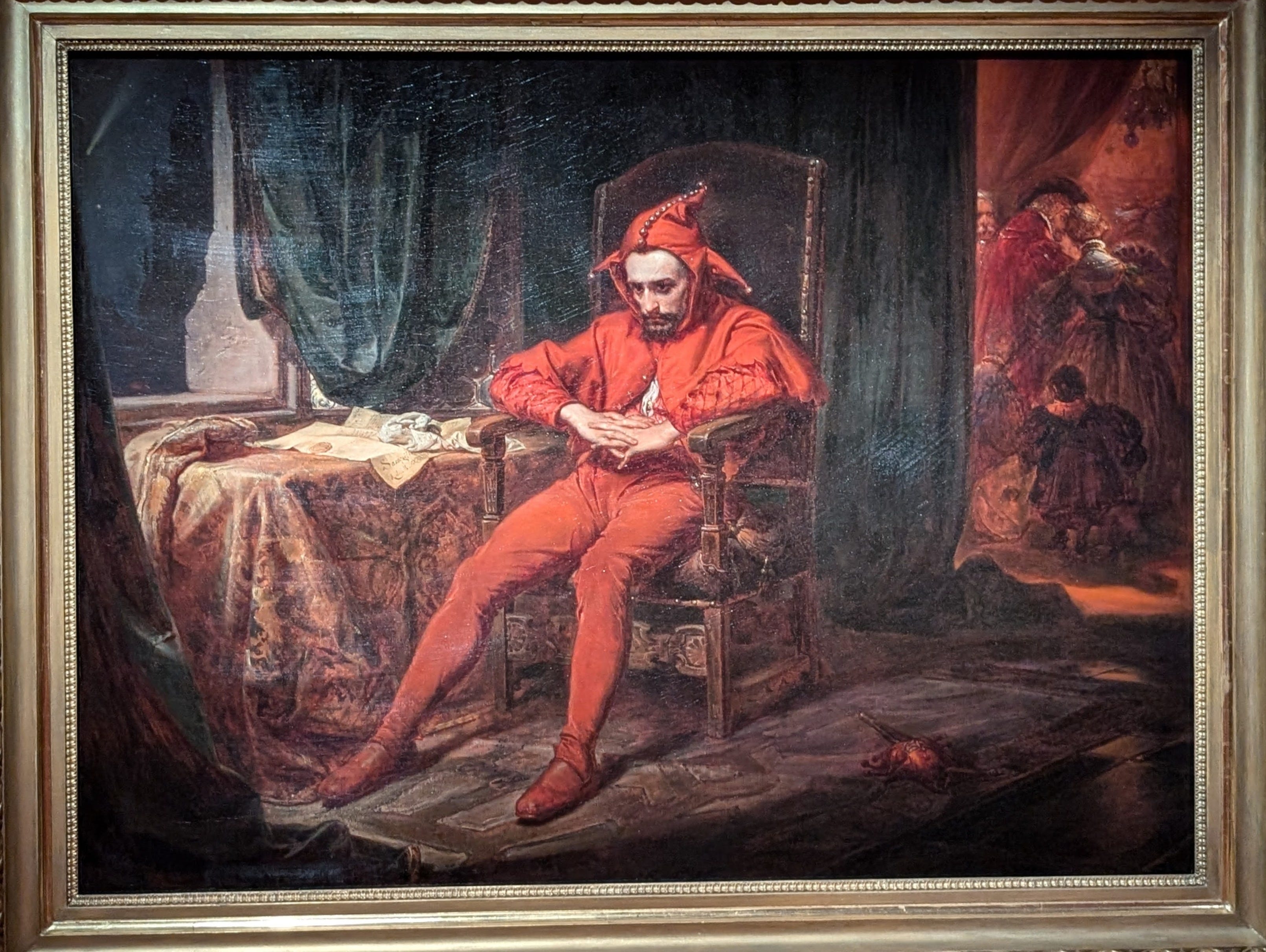
After a night’s sleep I was pretty sure I’d fallen victim to the local growth industry, the short con. Half curious, half embarrassed, I told my story to a woman who setting out the hotel’s breakfast buffet.
“Don’t ever!” she said in the tones of a lifeguard or a fire warden. “Don’t ever give them anything! They’re all from the rehab clinics and the homeless shelters. This used to be an industry city. Now it’s a rehabilitation city.”
She knew what she was talking about. With little invitation she told me of falling into clinical depression after her mother died, of spending 15 months in bed and losing her kid to the child protective services. One day the depression ended and she left Philadelphia with her last $3,000 for Schenectady, where she had friends and you could afford the rent. “A cheap place to start over,” she said. Home of the Friendless. She thought she might be able to get her kid back.
Telling me her story seemed to soften her, and she described how a friend of hers had recently been conned out of $25. I was hardly alone, which felt better. You just had to be hard.
I told my story again to another person working the front desk, an immigrant from South Asia. It felt like healing, or at least an effort to make sense of my confusion. He too had recently been taken in by a short con, a man with a briefcase on the courthouse steps. ”Don’t ever feel bad about this,” he said, in tones as certain as the woman in the breakfast room. “You were being a good person.”
I was in a wonder and a muddle. Everyone had stories of catastrophe and recovery, of endurance and lies and the struggle to believe in themselves. They were turning another broken corner, some were taking me in by leveraging my own need to believe in myself, in some certainty of goodness amidst the mess. If my twilight woman was a con, and I’m pretty sure she was, I wanted to know her real story, which was probably a lot more messed-up and interesting than that of a small town woman with a neck tattoo and a broken transmission.
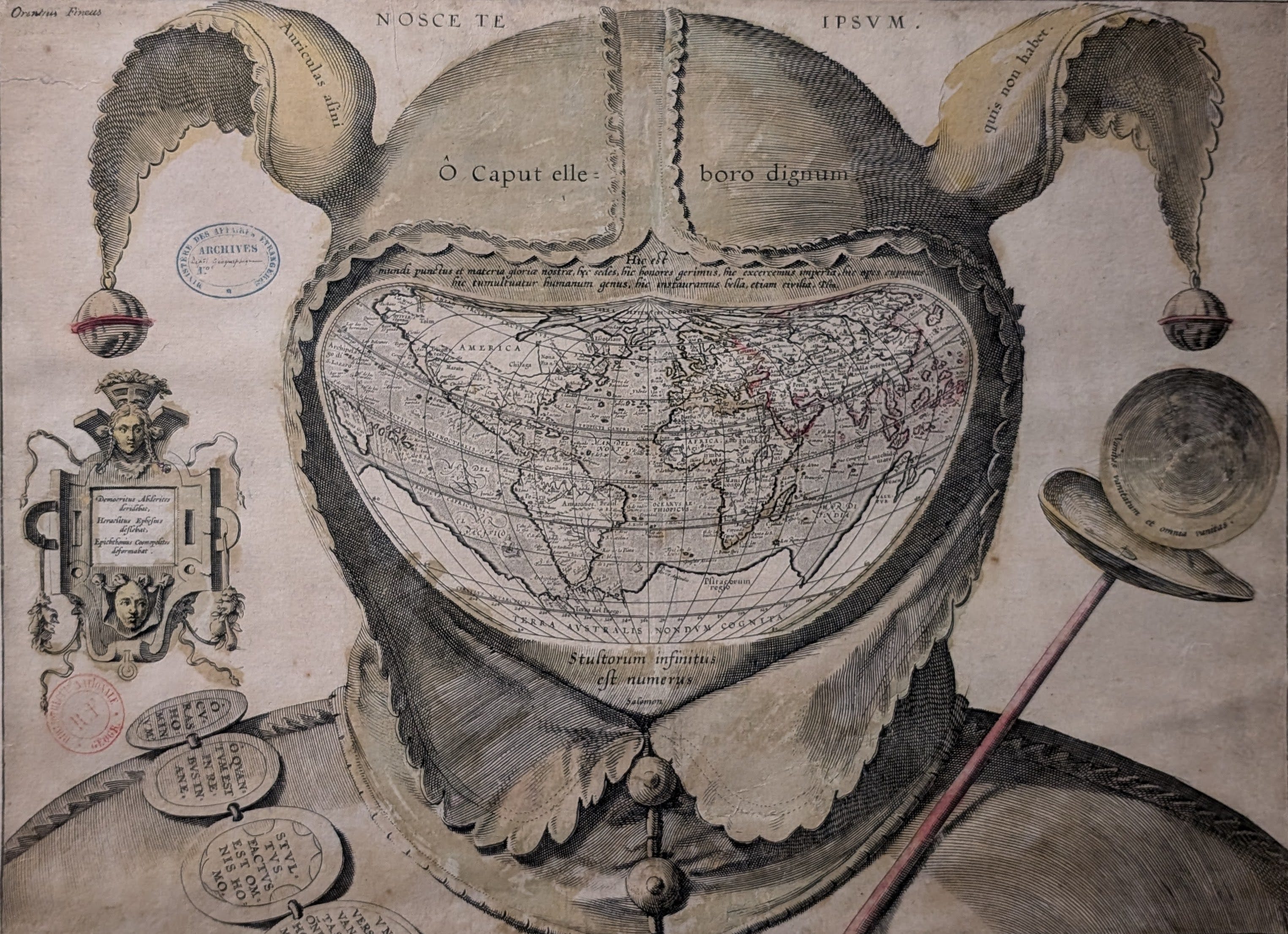
No less than with the fakir, I had been hypnotized. Only this time, it was by a story and an expression of raw need. To the chaos of a life I was given a chance to offer the certainty of being generous, of being in my own mind a good person.
Looking around, the engine of the short con - disorient someone, play off their struggle for certainty - generalizes well over space and time. Life is always chaotic, at some times more so than at others.
Writing about his turn to Communism in the nineteen-thirties, Irving Howe talked about struggling in the depths of the Depression, when it seemed like Capitalism had irredeemably failed, and some new system, a new certainty, was desperately needed. Today, technology and financial turmoil have been overthrowing old certainties for more than two decades. Lots of places can feel like Schenectady, post Jack Welch. People around the world have sought the false certainties of violence, of folk tale nativism, of a decider and a strongman. There are far more authoritarians than there are convincing ideologies of how the world should work, but that’s lost on us. Decisiveness is what we dearly seek, while we stay certain of our desire to be good.
Are people more susceptible to cons at times like this? We can mourn our choices, and also not feel too bad about them. But we should try and learn too, and do the hard work of living in confusion with compassion, keeping an eye for the bigger story and the more complex truth.
Educational textbooks to the international schools and U.S. Military base schools, from Jakarta to Seoul, and out as far as Guam. A good gig, and a story for another day.
"Schenectady" is derived from the Mohawk word skahnéhtati, meaning "beyond the pines.” There is an excellent 2012 movie called “The Place Beyond The Pines,” which takes place in the Albany-Schenectady area.
Welch was considered America’s Greatest CEO for much of his tenure, mostly for the way he kept the stock moving higher for two decades. His effect on America is now under serious revision, owing to the way he ruthlessly laid off employees, cut research, and used the GE Finance arm of the company for financial engineering to massage earnings. As much as anyone, he gave us the shareholder society, with all its powerful wealth creation and its equally powerful pervasive uncertainty.
Wonderful piece! If you sent me $100 I'd be able to get medicine for my finger cramps and write a longer comment.
A large branch of my family used to live in Schenectady. I don't know what brought them there though and I haven't seen them since I was small.